How Emotions Affect Organs: The Connection Between Feelings and Health
 Espanol
The intricate dance between our emotional state and physical health has fascinated healers, philosophers, and scientists for millennia. 🧠↔️❤️ Today, a growing body of scientific evidence powerfully confirms what many ancient traditions have long proposed: our feelings are not confined to our minds but have a direct and profound impact on the functioning of our organs. In this comprehensive guide, we will delve into the fascinating world of psychosomatic connections, exploring how specific emotions are linked to particular organs. More importantly, we will provide you with actionable strategies, including nourishing recipes and holistic practices, to help you maintain a harmonious balance between your emotional and physical well-being.
Espanol
The Mind-Body Connection: More Than Just a Feeling
Emotions are complex physiological responses to our internal and external environments. When we experience an emotion, it triggers a cascade of neurochemicals and hormones that communicate with virtually every system in our body. This isn't just a metaphorical link; it's a biological reality. Chronic emotional states, particularly negative ones, can create sustained stress on specific organs, leading to dysfunction and disease over time. Understanding this map of interconnection is the first step toward proactive, holistic health. 🗺️
Emotions and Their Corresponding Organs: A Detailed Map
Let's explore the specific relationships between common emotions and the organs they most affect. This knowledge empowers you to recognize potential physical manifestations of your emotional state.
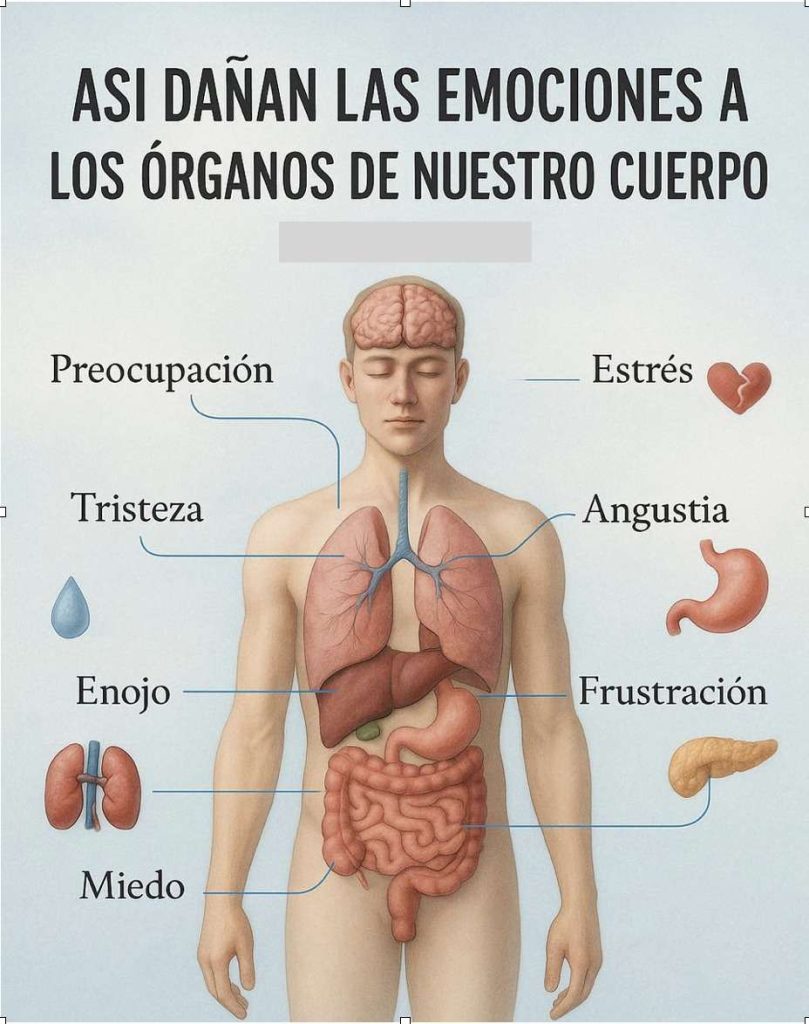
Worry & Overthinking: The Brain 🧠
Persistent worry and anxiety can lead to mental fatigue, insomnia, and an overactive nervous system. This constant state of "fight or flight" can exhaust the brain's resources. Combat this with mindfulness meditation and engaging in hobbies that fully capture your attention.
Stress: The Heart 💓
Acute and chronic stress directly affect cardiovascular health, influencing blood pressure and heart rate. The heart is highly sensitive to our emotional climate. Regular cardiovascular exercise, yoga, and meditation are proven to strengthen the heart and build resilience to stress.
Sadness & Grief: The Lungs 🌬️
Have you ever felt a literal "heaviness" in your chest when sad? Sadness and grief are deeply connected to the lungs and the process of breathing, which can become shallow and constricted. Conscious, deep breathing exercises and spending time in nature are vital for releasing grief and strengthening lung capacity.
Anguish & Anxiety: The Stomach 🤢
This connection is one of the most commonly experienced. The gut is often called the "second brain" due to its vast network of neurons. Feelings of angst and anxiety can disrupt digestion, leading to discomfort, bloating, and Irritable Bowel Syndrome (IBS). Drinking calming herbal teas like peppermint or chamomile can soothe the digestive tract.
Anger & Resentment: The Liver 🍃
In many medical traditions, the liver is associated with the smooth flow of Qi (energy). Pent-up anger and frustration can disrupt this flow, leading to stagnation, which may manifest as headaches, dizziness, and hormonal imbalances. Practicing forgiveness and engaging in physical activity are excellent ways to release stored anger and support liver health.
Frustration & Irritability: The Pancreas
The pancreas, vital for blood sugar regulation, can be affected by chronic frustration. Emotional volatility can contribute to unstable energy levels. Maintaining a positive outlook and consuming a balanced, low-glycemic diet helps keep both your mood and pancreas stable.
Fear & Insecurity: The Kidneys 🛡️
The kidneys are linked to our most primal fears and are considered the source of our vital energy. Chronic fear can deplete this energy, leading to fatigue and issues with the adrenal glands. Gentle exercises like Tai Chi and confronting fears in a safe, supportive environment can help fortify kidney energy.
Holistic Recipes for Emotional and Physical Balance
Nourishing your body with the right foods is a powerful way to support your emotional health. Here are three simple, nutrient-packed recipes designed to bring balance.
1. Soothing Chamomile and Lavender Infusion for Anxiety 🫖
This calming tea is perfect for unwinding after a stressful day. Chamomile contains apigenin, an antioxidant that binds to brain receptors, promoting relaxation.
- Ingredients: 1 tbsp dried chamomile flowers, 1 tsp dried lavender buds, 1 cup of boiling water, and a drizzle of raw honey (optional).
- Preparation: Place the chamomile and lavender in a mug. Pour boiling water over them, cover, and let it steep for 7-10 minutes. Strain, add honey if desired, and breathe in the calming aroma as you sip slowly.
2. Energizing Anti-Stress Green Smoothie 💚
Packed with magnesium from the spinach and healthy fats from the almond butter, this smoothie supports brain function and helps combat the physical effects of stress.
- Ingredients: 1 ripe banana, 1 large handful of fresh spinach, 1 tbsp of almond butter, 1 cup of unsweetened almond milk, and a sprinkle of cinnamon.
- Preparation: Combine all ingredients in a high-speed blender and blend until smooth and creamy. Enjoy this as a nourishing start to your day.
3. Uplifting Quinoa and Avocado Salad for Sadness 🥑
This salad is rich in tryptophan (a precursor to serotonin, the "feel-good" hormone
Deja una respuesta